Tooth Fairy Magic Around the World: What Happens to Lost Baby Teeth?
08.19.26 - Education
Most children have 20 baby teeth, also known as primary, deciduous, or milk teeth. Eventually, these teeth fall out—a process called exfoliation—to make room for their permanent adult teeth.
But what happens to those tiny teeth once they fall out?
Well, that’s where the magic comes in! 🦷✨
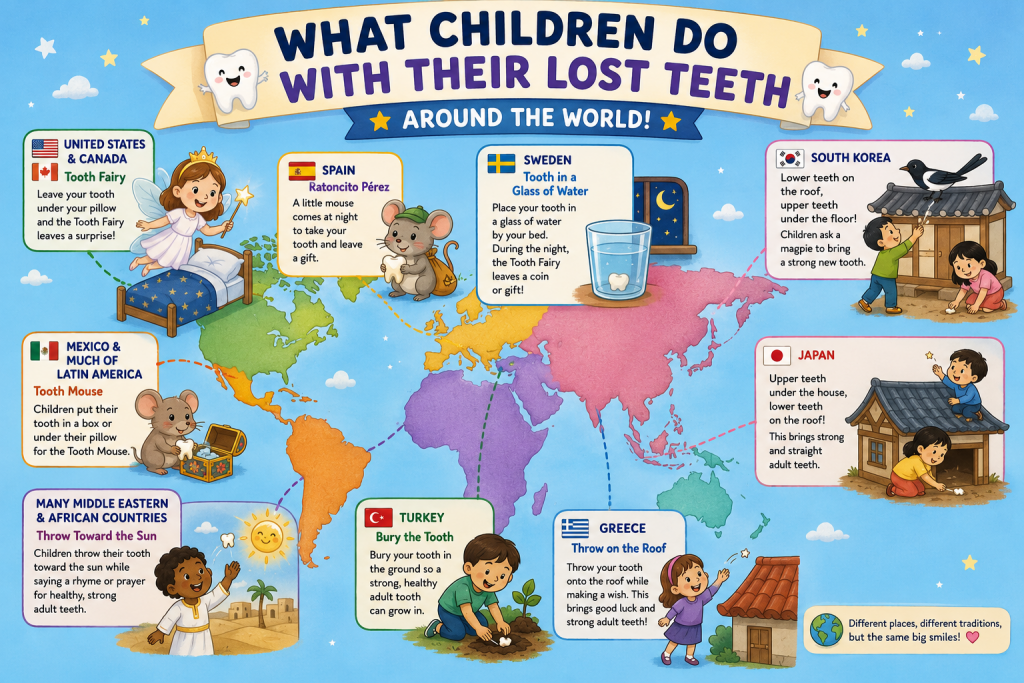
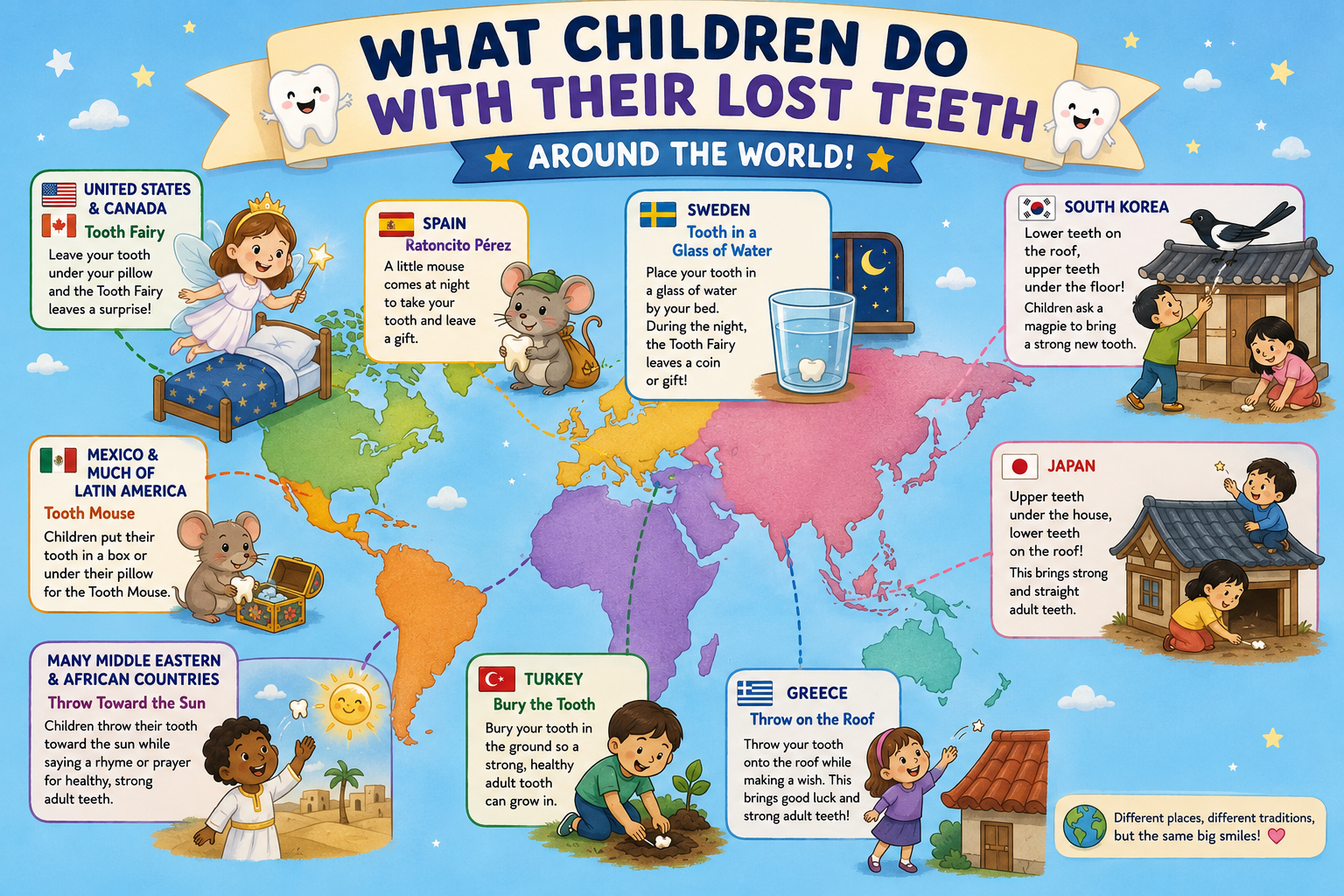
Here in the United States, children traditionally leave their lost baby teeth for the Tooth Fairy, who comes in the night and leaves a gift in return. But the Tooth Fairy isn’t the only magical visitor who collects children’s teeth. Around the world, families have many different traditions for celebrating a lost tooth.
🧚 The Tooth Fairy Around the World
The Tooth Fairy tradition can be found in many places, including Australia, Canada, Denmark, Norway, Serbia, Singapore, South Korea, Switzerland, Turkey, the United Kingdom, and the United States.
In Sweden, a baby tooth may be placed in a glass of water for the Tandfe, or Tooth Fairy, to drink before leaving a gift.
In Argentina, children may place their tooth in a glass of water for Raton Pérez, a magical mouse who takes the tooth and leaves a gift behind.
🐭 When the Tooth Fairy Has Four Legs
Mice are magical tooth collectors in many parts of the world!
Raton Pérez collects children’s teeth in Argentina, Colombia, Uruguay, Venezuela, and Spain, where he is also known as Ratoncito Pérez.
Other cultures have their own versions of the magical tooth mouse. Depending on the country or region, children may leave their teeth for:
- El Ratón in Guatemala and Mexico
- El Ratón de los Dientes in Chile, Mexico, and Peru
- El Ratón Miguelito in Colombia
- El Ratoncito in Argentina
- La Petite Souris (“the little mouse”) in France
- Topino in Italy
In other places, including Germany, New Guinea, Russia, South Africa, Spain, Ukraine, Venezuela, Uganda, and India, traditions may simply involve a mouse or rat taking the lost tooth.
🌎 Sometimes, the Tooth Takes a Journey
Not every culture gives a lost baby tooth to a fairy or a mouse. In many traditions, children throw their teeth as part of a special ritual.
The direction or destination can be important. Teeth may be thrown:
- Upward, downward, or in a particular direction
- Toward the east or west
- Toward the child’s birthplace
- Toward the sun, sky, or moon
- Into a river or the sea
- Into a garden, field, or chicken coop
- Onto a roof or over the house
- Up a chimney
- Behind the stove or under the bed
- Into a fire
Some traditions even specify how the tooth should be thrown—over the child’s head, behind their back, over their shoulder, or between their legs.
These customs often have a special purpose. In many cultures, the ritual is believed to help the child’s permanent teeth grow in straight, strong, or healthy. Some traditions also include saying a wish or prayer while the tooth is thrown.
🌱 Hide It, Bury It, or Give It Back to Nature
Other cultures have traditions of placing, hiding, or burying lost baby teeth.
A tooth might be:
- Buried in the ground
- Hidden in an animal burrow, such as a mouse or gopher hole
- Placed near a tree or special plant
- Hidden in a log
- Placed with an ancestor
- Kept until the child dies and then buried with them
- Placed under a pregnant cow
- Stored in a tin can
- Hidden in a wall
- Placed near where the child is expected to work in the future
Some traditions are especially creative. In certain cultures, baby teeth may be turned into jewelry. Others feed the tooth to an animal—or, in some traditions, the child’s mother eats the tooth!
🦷 One Tiny Tooth, So Many Traditions
Losing a baby tooth is a universal childhood milestone, but what happens afterward varies dramatically from culture to culture.
A tooth might become a gift from a fairy, a treasure for a magical mouse, an offering to nature, part of a prayer or wish, or even a symbol of the child’s future.
Whether it’s tucked beneath a pillow, placed in a glass of water, tossed toward the sky, buried in the earth, or collected by a tiny magical creature, one thing is clear: around the world, losing a baby tooth can be a pretty magical event!
So this National Tooth Fairy Day, August 22, take a moment to celebrate the little teeth that helped children learn to smile, chew, and grow—and the fascinating traditions that have grown around them. 🧚🦷✨